Again, elsewhere: the KLOW Meds replication gap
A repair finding becomes much more interesting when another laboratory can reproduce it. That second laboratory became my question as I followed the KLOW studies.
The orthopaedic review
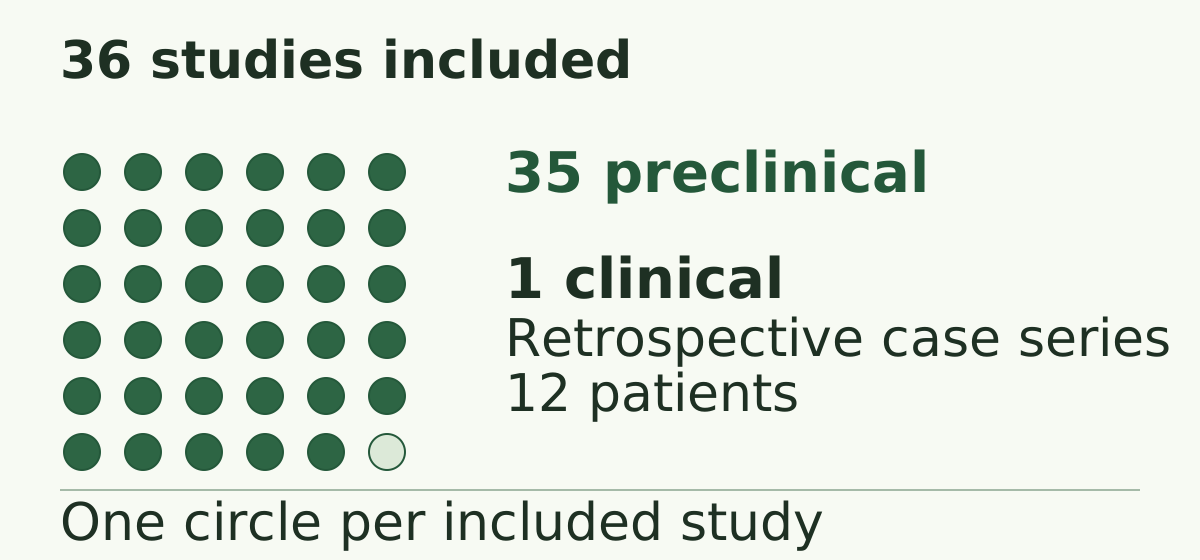
The number that troubles me is 35. A 2025 systematic review of BPC-157 in orthopaedic sports medicine screened 544 articles and included 36, comprising 35 preclinical studies and one retrospective clinical case series of 12 patients. The review also flagged the lack of independent, multicentre replication. A long bibliography can still leave a finding waiting for its second laboratory.
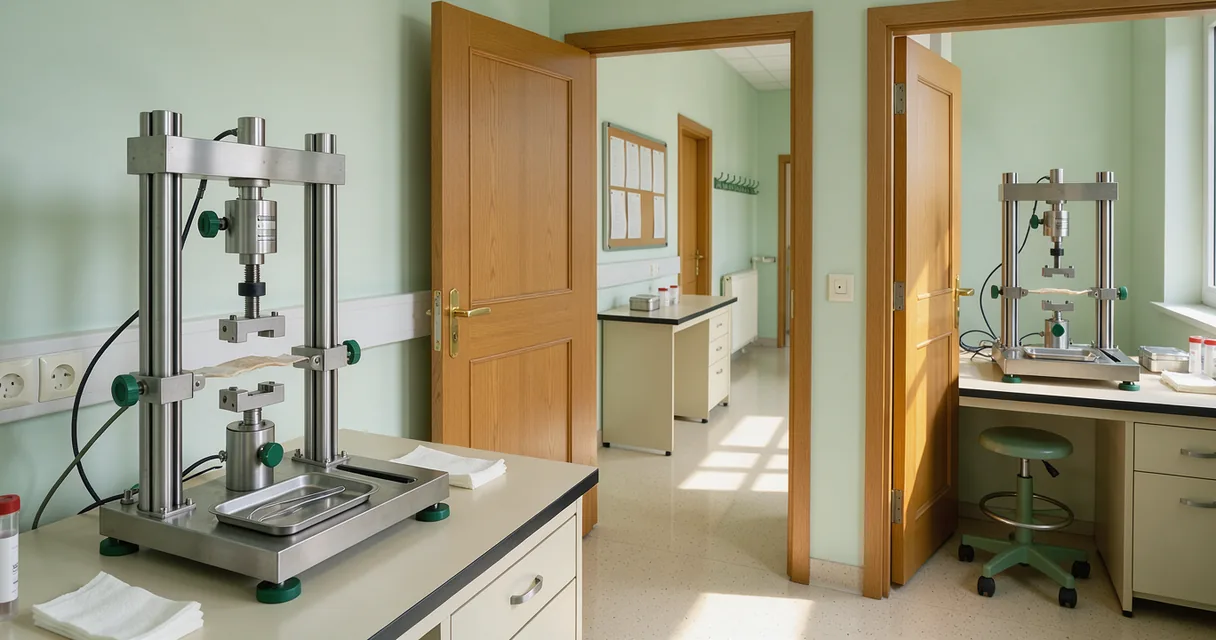
The ambition of the tendon experiments appeals to my impatient side. A severed or detached connection has a physical job to recover: transmitting force. Measuring strength gives that ambition something concrete to stand on. But the review leaves me wanting the same repair tested by other groups. That is a request for replication, not a claim that an attempted replication failed.
The four ingredients
KLOW gathers GHK-Cu, BPC-157, TB-500 and KPV into a research blend. The commonly listed 80 mg composition contains GHK-Cu 50 mg and 10 mg each of the other three. Those are the contents of a formulation, rather than a human dose. The molecules remain chemically distinct when combined.
The appeal is easy to understand: copper-peptide work on skin, BPC-157 tendon experiments, thymosin beta-4 wound research and KPV inflammation studies sound like parts of a useful repair programme. The published record has yet to test the full combination against its ingredients, a subset or placebo. The arithmetic stops working for me when separate successes become a benefit claimed for the mixture. The ingredient and certificate-of-analysis page starts with the contents of the name.
BPC-157 across models
Some of the BPC-157 findings come from different experimental settings. In vascular cells and rats with hindlimb ischaemia, investigators examined vessel-growth signalling and recovery of blood flow. The transected rat Achilles tendon work examined repair and tendocyte growth, including cells studied outside the animal. These results make a biological story more plausible. They leave open how reproducibly a particular injury improves under the same test.
That distinction has become the interesting part of KLOW for me. A new tissue, route or measurement can extend a hypothesis; repeating a defined result in another laboratory tests its dependability. Both deserve space, with their different purposes intact. The experiment notes follow those particulars.
Comparing the full mixture
For the blend, the essential comparison is still ahead: the combination alongside its individual components or subsets, with a defined outcome and safety follow-up. Until then, synergy describes a proposed interaction. It has no measured size for KLOW.
The word meds carries an expectation of dependable effects. I think the evidence ought to earn that expectation through repeated, controlled findings. KLOW and its four constituents have no FDA approval; the approval and sports questions set out the current status, while reported effects and cautions cover the much less orderly accounts outside trials.